













February 14 is the day we celebrate love, giving flowers, chocolate, and romantic letters to the people we care about. But behind the roses and candy hearts is a story that’s not so sweet. Valentine’s Day originated from violent, ancient rituals before evolving into the affectionate traditions we have today.
Violent Beginning
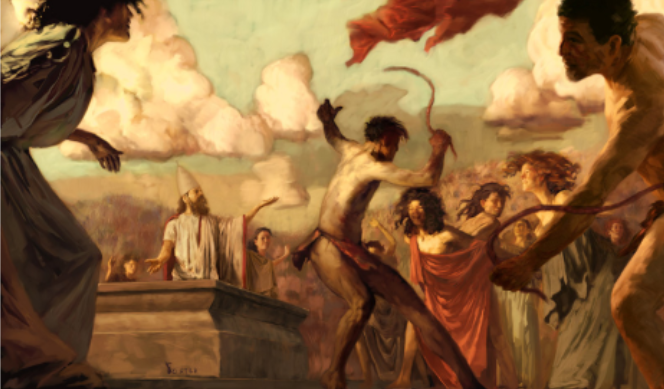
An article by Arnie Seipel says that the Ancient Romans held a festival called Lupercalia from February 13 to 15. This celebration was meant to honor fertility and Roman Gods.
During the celebration, men would sacrifice goats and dogs, then cut their hides into strips and dunked them in blood. Young women would then line up for the men to whip them with the bloody animal hides, believing it would make them more fertile.
The festival also included a matchmaking lottery where men and women had their names drawn from a jar, and were randomly paired for the festival’s duration. These pairs stayed together longer if the match was right.
Saint Valentine
How did we turn this violent festival into a day about love? Many historians trace it back to a man named Saint Valentine. History.com says Saint Valentine was a priest in Rome during the third century.
At the time, Emperor Claudius II banned young couples from getting married, believing young single men made better soldiers. Valentine saw this injustice and secretly continued to perform marriages for young couples. When this was discovered, he was caught and executed on February 14.
Another story from History.com suggests that an imprisoned man named Valentine sent the first “valentine,” greeting himself after he fell in love with a young girl who visited him during his confinement. Before his death, he wrote her a letter signed “from your Valentine,” an expression we still use today.
While the legends of Valentine are blurred, his story helped shift the day’s meaning from brutal rituals to acts of love and devotion.
Romantic Literature
By the Middle Ages, Valentine’s Day was becoming more romantic. Writers like Geoffrey Chaucer and Shakespeare connected February 14 with choosing a partner, forever linking the day to romance.
English Poet Chaucer began to popularize it by writing about how birds would choose their mate on February 14, the day France and England believed mating season began. This only helped to build growth in Valentine’s Day since February was already seen as a month of love.
Shakespeare also helped romanticize Valentine’s Day by writing “A Midsummer Night’s Dream.” This hamlet alluded to the idea that if two single people meet on the morning of Valentine’s Day, they will most likely get married.
Inspired by these individuals, people began writing small love notes and poems to one another. These early “valentines” spread quickly across Europe, as everyone began to follow the trend of writing to their loved ones.
The Gift of Giving
As Valentine’s Day grew more romantic, businesses saw another way to make bank and they took advantage of it. Candy companies like Cadbury started selling chocolates in fancy heart-shaped boxes in the 1800s. Soon, as technology evolved, these fancy chocolate boxes became more affordable, further expanding the tradition of gifting on Valentine’s Day.
Shortly, it became common for friends, lovers, and family to give each other small tokens of their affection. cards, sweets, and flowers,especially red roses, became symbols of love and passion for a tradition that is still going strong.
Spreading Love Today
Now, Valentine’s Day is a blend of ancient traditions, religion, and modern romance. It’s a day to celebrate all kinds of love, not just romantic, but friendships and family too. Valentine’s Day is here to remind us that love, in all its forms, is worth celebrating every year.